Quality dogs for family, sports & showing
Quality dogs for family, sports & showing
When many people hear the word “Corgi,” they picture the Pembroke Welsh Corgi. But did you know there are actually two distinct Corgi breeds? The Cardigan Welsh Corgi is the older of the two and is known for its tail, ancient Welsh roots, herding background, and remarkable versatility.
Here are 10 fascinating facts about this beloved breed.
Often called the “Corgi with a tail,” the Cardigan Welsh Corgi can be easily distinguished from the Pembroke Welsh Corgi by its long tail. This physical trait remains one of the simplest ways to tell the two breeds apart.
The Cardigan Welsh Corgi came to Cardiganshire, Wales, with the Celts from Central Europe around 1200 B.C. This history makes the Cardigan the older of the two Corgi breeds and one of the earliest breeds in the British Isles.

Although Cardigans are often associated with herding, their original role was slightly different. Hundreds of years ago, Welsh farmers allowed cattle to graze on common land, creating competition for pasture.
To help manage livestock, Cardigan Welsh Corgis were trained to nip at cattle’s heels and drive them across the land. Their low stature helped them avoid kicks while working close to the animals.
The Cardigan Welsh Corgi was highly valued in ancient Wales. Because the breed’s working abilities contributed directly to a family’s livelihood, strict penalties existed for anyone who harmed or stole one of these dogs.
The name “Corgi” is generally believed to come from the Welsh words “cor,” meaning dwarf, and “gi,” meaning dog. Some sources suggest “cur,” meaning working dog, as a possible origin. “Cardigan Welsh” refers to the breed’s homeland in Wales.

The Cardigan’s distinctive ears are more than just an adorable feature. The breed is known for exceptionally acute hearing. They can even distinguish familiar sounds from unusual noises, making it an effective watchdog.
Historically, that same sharp hearing helped them react quickly to danger while working alongside cattle.
Despite their short legs, Cardigan Welsh Corgis are energetic, athletic dogs. They thrive as companions and enjoy spending time with their families.
Their natural herding instincts and intelligence also make them successful competitors in a variety of dog sports, including agility.
The Cardigan’s practical double coat is medium in length and comes in a wide range of colors, shades, and patterns.
Accepted colors include:
Markings can include:
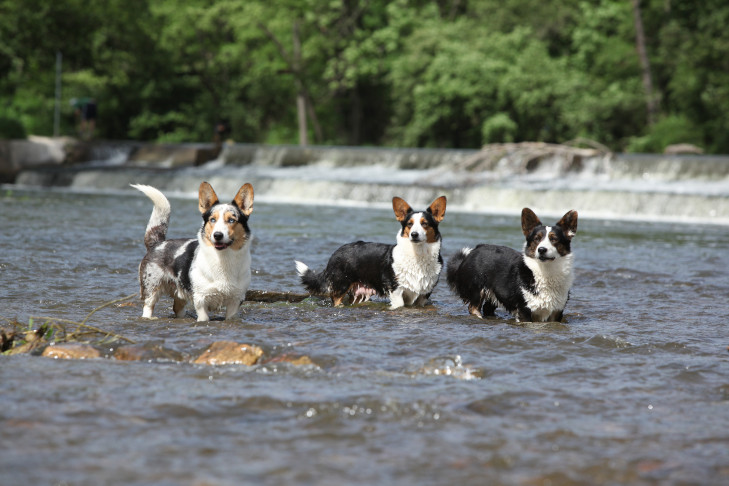
Cardigan Welsh Corgis have a double coat consisting of a short, soft, dense undercoat and a longer, weather-resistant outer coat. This coat helped protect them while working outdoors in varying conditions.
Regular brushing at least once a week with a shedding blade, slicker brush, or fine pin brush can help keep the coat healthy and looking its best. Like many breeds with double coats, Cardigans typically experience heavier seasonal shedding twice a year.
The AKC recognized the Cardigan Welsh Corgi in 1935. Since then, the breed has belonged to three different AKC groups.
It was originally classified in the Non-Sporting Group, later moved to the Working Group, and eventually placed in the Herding Group, where it remains today.
Key Takeaways