
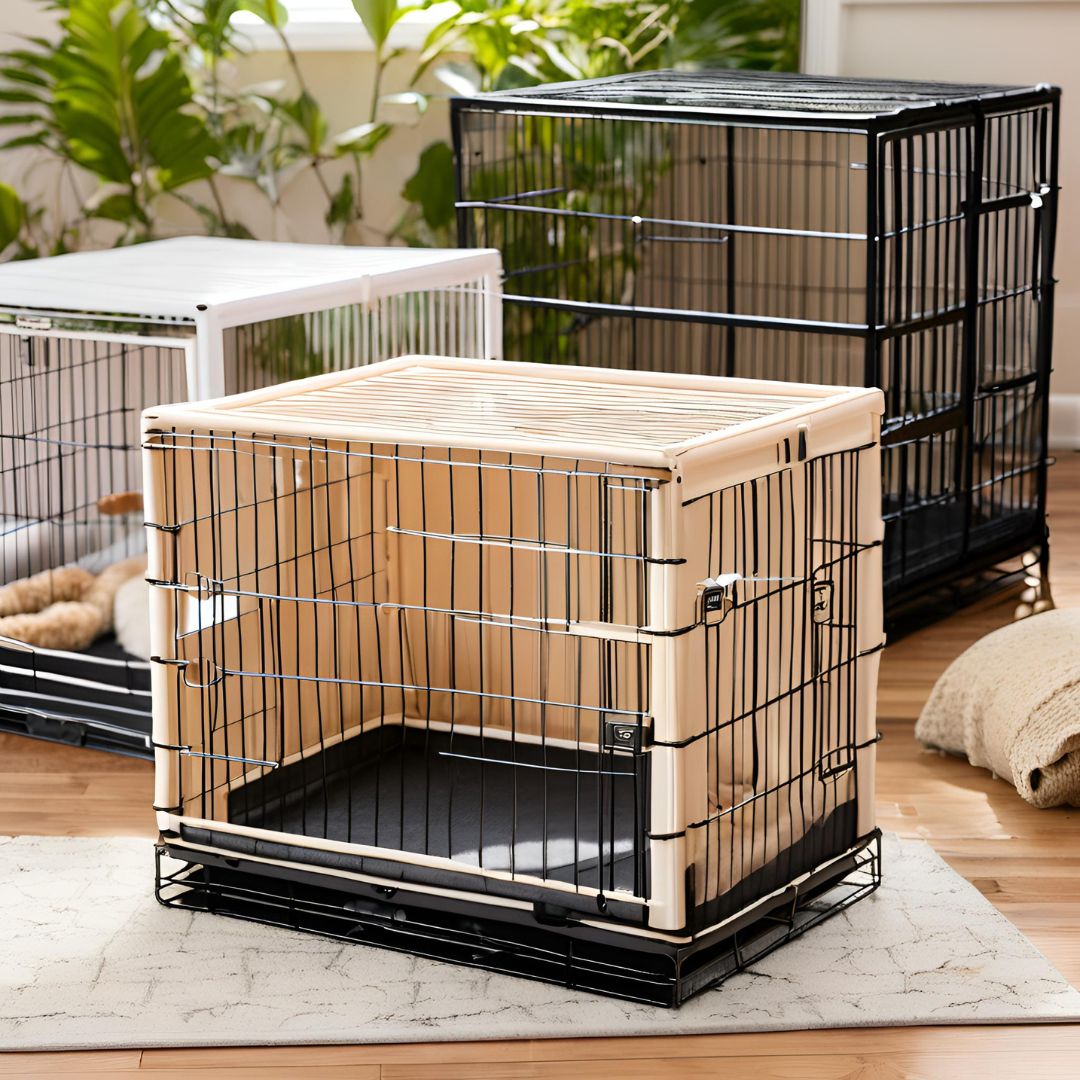
Step 1: Choose the Right Crate
Before you start, make sure to select a crate that’s appropriately sized. Your puppy should have enough space to stand up, turn around, and lie down comfortably, but not so much space that it encourages accidents. Crates with adjustable dividers can be useful for growing puppies, allowing you to modify the space as they grow.
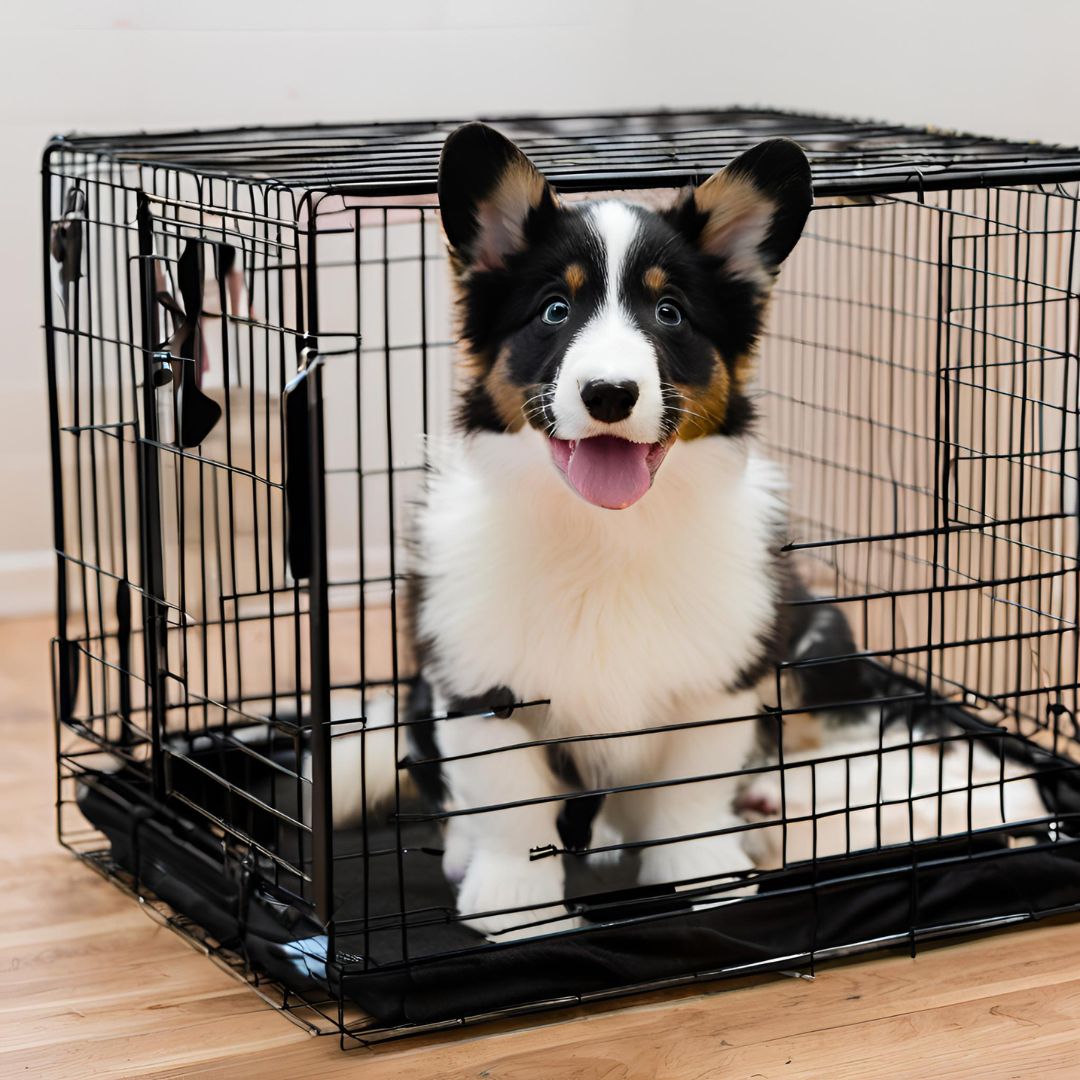
Step 2: Introduce the Crate Gradually
Create Positive Associations: Set up the crate in a quiet area of your home, and make it cozy with soft bedding and perhaps a favourite toy. Keep the door open, and let your puppy explore it freely. Drop a few treats inside so your puppy associates the crate with something positive. Encourage them to go in and sniff around, rewarding them every time they do. Avoid Pressure or Force: Never force your puppy into the crate or close the door on them when they’re not ready. Let them get comfortable at their own pace, building a sense of curiosity and positive association with the crate.
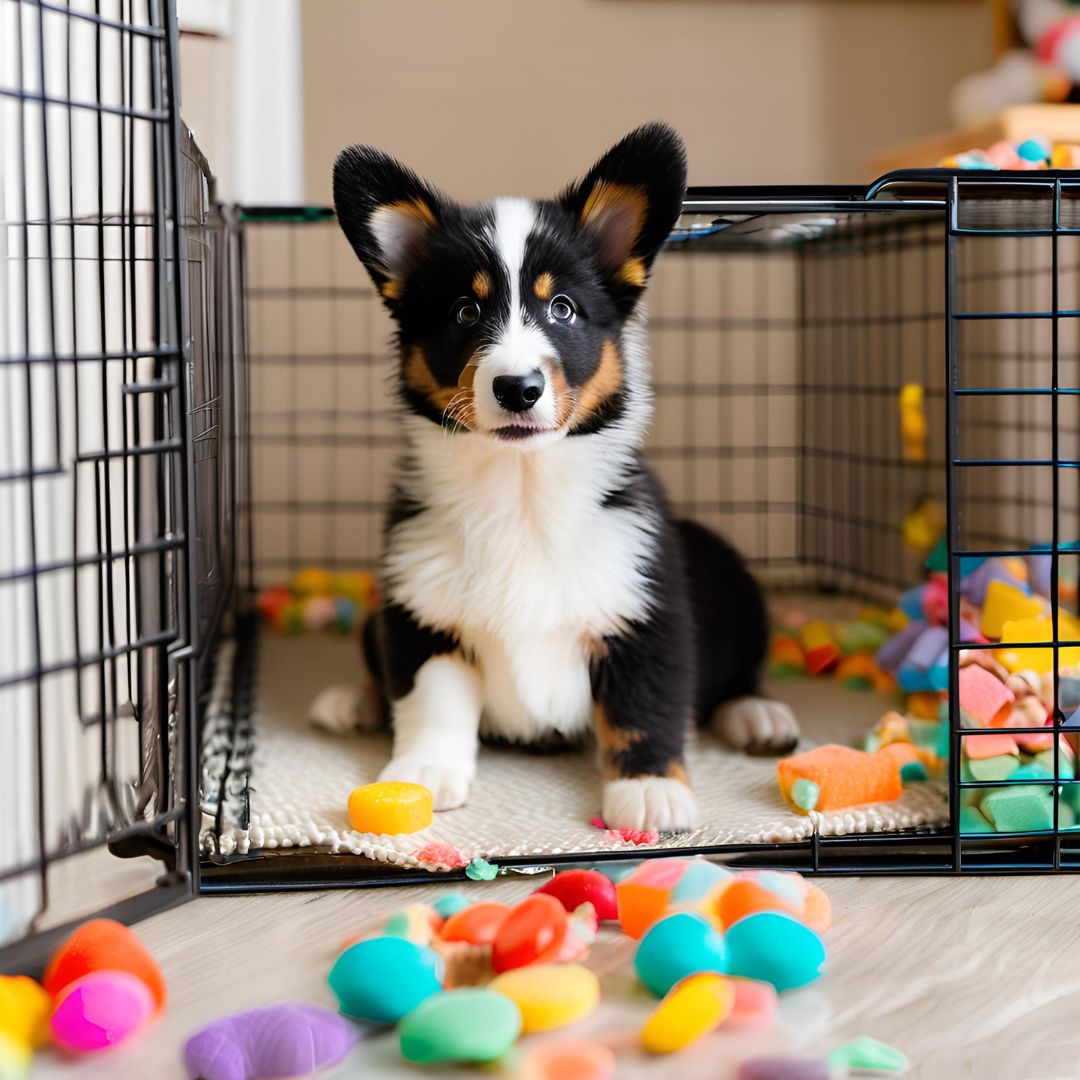
Step 3: Encourage Short Stays
Once your puppy is comfortable going in and out of the crate, encourage short stays. Sit nearby and praise them when they choose to stay inside, keeping the door open at first. Gradually increase the length of these stays, and once they’re calm and comfortable inside, you can try closing the door briefly. Timing is Key: Start by closing the crate door for just a few seconds. If they remain calm, reward them with a treat and open the door. If they whine or bark, wait until they’re quiet to avoid reinforcing vocalisation. Over time, increase the time with the door closed, helping your puppy become comfortable with being inside for longer periods.
Step 4: Add a Cue Word
Introduce a cue word, like “crate” or “bedtime,” to signal that it’s time to go into the crate. Use this cue consistently every time you want your puppy to enter. Say the word right before they go in, and reward them when they do. Over time, they’ll learn to associate this cue with going into their crate, making it easier for you to guide them when it’s time for rest or alone time.
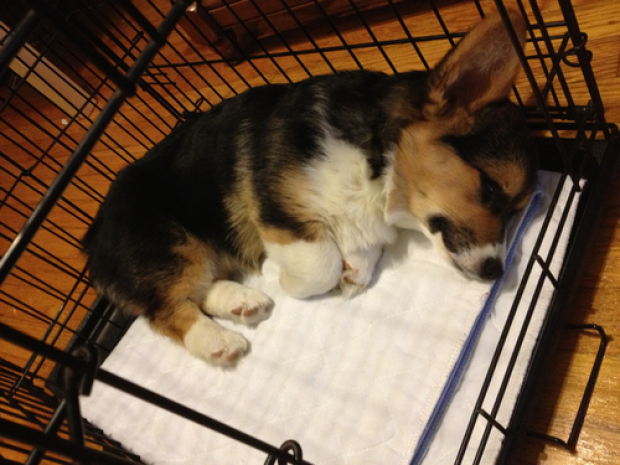
Step 5: Gradually Increase Alone Time
Once your puppy is comfortable staying in the crate with you nearby, it’s time to help them adjust to alone time in the crate. Start by leaving the room briefly and returning quickly. Reward them if they remained calm. Gradually increase the amount of time you’re out of sight, and vary the lengths of time to help prevent separation anxiety. Use the Crate for Quiet, Restful Times: Encourage crate time when your puppy is naturally tired, such as after a play session or a meal. This helps them see the crate as a place to rest and relax rather than a place they’re “sent” when you leave.
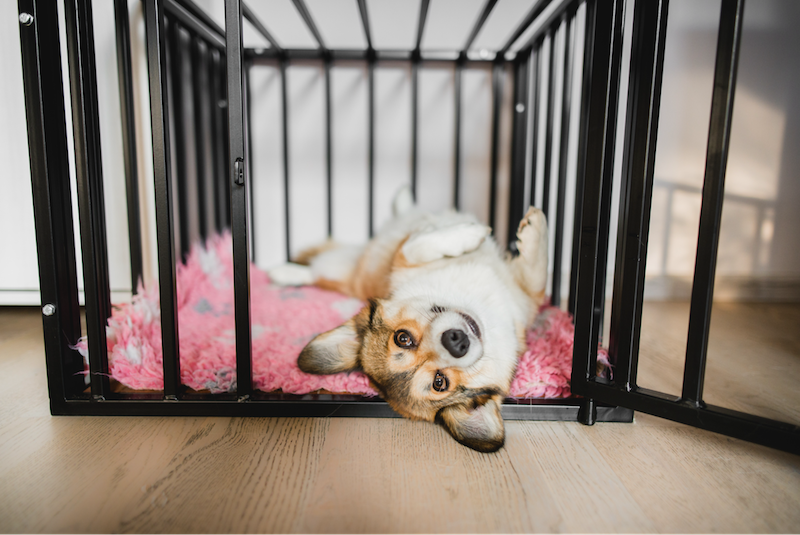
Step 6: Build a Routine
Consistency is key in crate training. Create a daily routine for your puppy that includes scheduled crate time. For example, incorporate crate time into your puppy’s routine in the morning, after meals, and at night. Puppies thrive on consistency, and a routine helps reinforce the idea that crate time is part of their day.

Step 7: Troubleshoot Common Issues
Whining and Barking: If your puppy whines or barks in the crate, it’s important not to reward them by letting them out immediately. Wait for a moment of quiet before opening the door, even if it’s just a brief pause. This helps your puppy learn that calm behaviour is rewarded. Chewing and Over-excitement: Young puppies may chew or scratch at the crate out of excitement or frustration. Make sure they’re getting enough exercise, mental stimulation, and regular crate breaks to help them manage their energy levels.